
Blockchain in Digital Transformation: Real-World Applications and Potential

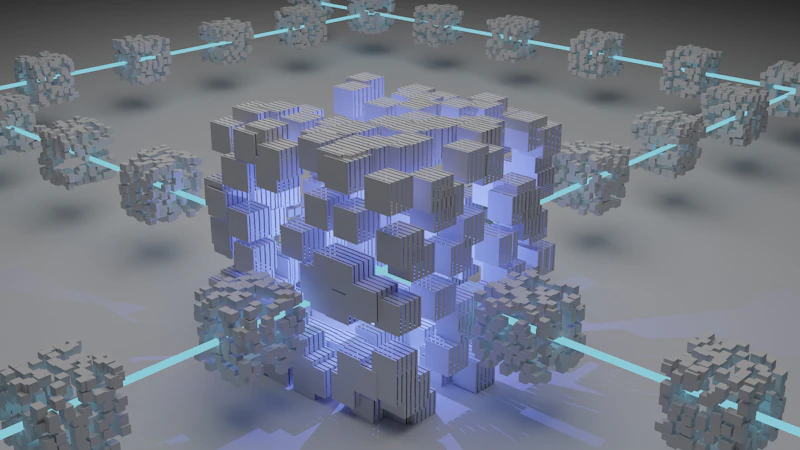
Blockchain has moved far beyond cryptocurrency. Enterprises are now using blockchain technology to solve real business problems: food traceability, automated contract execution, cross-border payments, and digital identity verification.
How Blockchain Works

A blockchain is a distributed ledger — a database replicated across many nodes — where transactions are grouped into blocks, cryptographically linked (chained), and validated by network consensus. Once recorded, data cannot be altered without invalidating all subsequent blocks, making fraud extraordinarily difficult.
Key properties: Immutability (records cannot be changed), Transparency (all participants see the same data), Decentralization (no single point of control or failure), Smart Contracts (self-executing code that automates agreements).
Enterprise Blockchain Applications
Supply Chain and Food Safety

Walmart, Carrefour, and Nestle use blockchain to trace food from farm to shelf in seconds — what previously took days. During the 2018 E. coli contamination crisis, Walmart could identify affected romaine lettuce sources in 2.2 seconds versus 7 days with traditional systems.
Smart Contracts in Finance
DeFi (Decentralized Finance) protocols use smart contracts to execute loans, swaps, and settlements automatically without banks as intermediaries. Traditional trade finance — letter of credit processing — that takes 7–10 days can be completed in hours with blockchain.
Digital Identity
Self-sovereign identity on blockchain allows individuals to own and control their digital identity — sharing only what's needed for each interaction, without relying on centralized identity providers that are vulnerable to breaches.
Healthcare Records
Patient records on a permissioned blockchain are accessible only by authorized providers, are tamper-proof, and can follow patients across healthcare systems — solving the interoperability problem that costs healthcare systems billions annually.
Blockchain Limitations
Blockchain is not a universal solution. Scalability remains a challenge — public blockchains process far fewer transactions per second than Visa or Mastercard. Energy consumption (for proof-of-work chains) and regulatory uncertainty are other considerations.
Conclusion
Blockchain is maturing from experimental to production-grade technology across industries. The use cases where blockchain adds genuine value are those requiring trust between parties who don't fully trust each other. Contact Laratech to evaluate whether blockchain is the right tool for your business challenge.