
What is Big Data? How to Leverage Large Data Sets for Business Growth

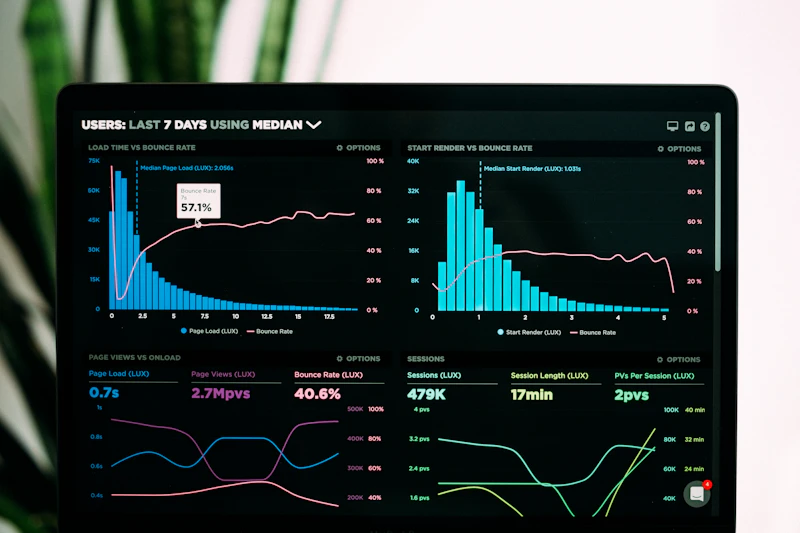
Every day, the world generates over 2.5 quintillion bytes of data. This number grows exponentially as more devices connect to the internet, digital transactions multiply, and social media interactions surge. This is the raw material of the Big Data revolution.
What is Big Data?

Big Data refers to datasets that are too large, fast-moving, or complex to be processed by traditional database tools. It is characterized by the "5 Vs": Volume (massive scale), Velocity (speed of generation and processing), Variety (structured, semi-structured, and unstructured data), Veracity (reliability of data), and Value (business insights generated).
Big Data Technologies
Data Lakes and Warehouses
Data lakes store raw, unprocessed data at any scale, while data warehouses store processed, structured data optimized for analysis. Modern architectures often use a "lakehouse" approach combining both.
Distributed Processing: Hadoop and Spark
Apache Hadoop pioneered distributed storage and processing of big datasets. Apache Spark succeeded it by processing data in memory, achieving speeds up to 100x faster for certain workloads — making real-time analytics feasible.
Stream Processing
Technologies like Apache Kafka enable real-time processing of data streams — critical for fraud detection, real-time personalization, and IoT sensor data processing.
Real-World Big Data Applications

- Retail: Customer behavior analysis, dynamic pricing, inventory optimization.
- Finance: Real-time fraud detection, credit scoring, algorithmic trading.
- Healthcare: Disease prediction, drug discovery, personalized treatment plans.
- Manufacturing: Predictive maintenance, quality control, supply chain optimization.
- Marketing: Customer segmentation, campaign optimization, attribution modeling.
Building a Data-Driven Organization
Technology is only one part of the equation. Becoming data-driven requires a cultural shift: democratizing data access, building data literacy across the organization, and establishing clear data governance policies. Data must be trusted, accessible, and actionable.
Conclusion
Big Data is not about hoarding data — it's about extracting value from it systematically. Organizations that build strong data capabilities today will make better decisions, serve customers more effectively, and innovate faster than competitors. Contact Laratech to design a data strategy for your business.